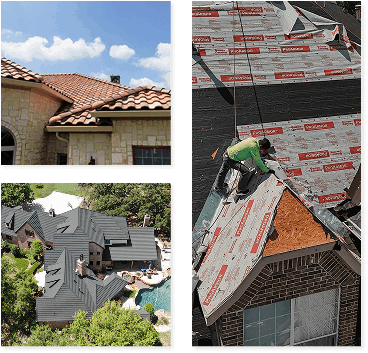
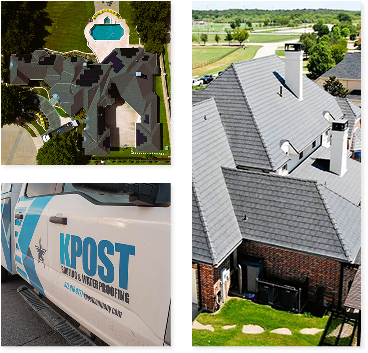
What a Dallas Roof Replacement Includes
A replacement starts with a full tear-off down to the deck. That lets the crew see the decking, and boards that are water stained, soft, delaminated or no longer holding nails get replaced before anything new goes on. Drip edge goes on at the eaves and synthetic underlayment covers the deck, with self-adhered membrane added in the valleys and around penetrations. Then come the starter course and the shingles, finished with ridge caps. Step and counter flashing gets rebuilt at walls and chimneys, and the attic ventilation is balanced between intake at the soffits and exhaust at the ridge.
What Drives the Cost of a Roof Replacement
No two roofs price the same, even on the same street. The main factors are the size of the roof, its pitch and how cut up it is, the material you choose, and how much decking turns out to need replacing once the old roof is off. Steep pitches take longer to work, and dormers and multiple valleys add flashing and labor. Inside Dallas city limits, replacing a whole roof also requires a re-roof permit. Upgrades such as Class 4 impact-resistant shingles cost more at the start but can lower your insurance premium afterward.
How Long a Dallas Roof Replacement Takes
Most residential replacements take one to three days once the crew starts, with material usually delivered a day or two ahead. Tear-off is the first and loudest day. Hidden decking damage is the most common reason a schedule runs long, and weather can push it back too. In summer, heat can shorten the working day on the roof. Spring and early summer are active hail months, so late winter and fall are popular windows for a planned replacement. Our day-by-day roof replacement timeline and our guide to how long a roof replacement takes go into more detail.
Insurance-Funded Roof Replacements
When hail or wind is the reason for the new roof, the claim shapes the job. A replacement cost policy usually pays in two checks. The first is the actual cash value, meaning the estimate minus depreciation and your deductible. The rest, called recoverable depreciation, is released once the work is finished and documented. Tear-off often turns up items the adjuster could not see, such as rotten decking or missing flashing, and those go back to the carrier as a supplement with photos.
If you want to upgrade, for example to an impact-rated shingle, the claim pays the like-for-like amount and you pay the difference, so get that split in writing before work starts. Your deductible is yours to pay, and Texas law does not let a contractor waive it. More on how we handle storm damage roof replacement in Dallas.