

Key Takeaways
- Panel efficiency went from 15% to about 20% since 2010. Standard panels now convert around 20% of the sunlight hitting them, with the best models exceeding that. Over the same period, manufacturing scale and demand cut panel costs by as much as 60%, which is what changed the payback math.
- Panels lose output slowly, not suddenly. Most manufacturers publish a degradation rate of 0.3 to 0.5 percent per year. A panel does not stop working at year 25. It simply produces less than it did new.
- Inverter choice matters on a shaded roof. A string inverter converts a whole row of panels at once and costs less. Microinverters sit under each panel and let it perform independently, which usually earns its price on a roof with uneven sun.
- Battery storage keeps solar power available after dark. A home battery such as the Tesla Powerwall stores the excess energy your panels generate. That means even during a power outage, your home or business can stay powered.
- The federal residential credit has ended. The Section 25D credit ended for systems placed in service after December 31, 2025, so payback figures published before 2026 are out of date. Run current numbers instead.
Solar power systems have grown in popularity in recent years, and for good reason. Solar energy has long been a smart, sustainable way to reduce utility bills for homes and businesses. Recent advancements in technology have made solar systems more effective and efficient while eliminating many of the drawbacks previously associated with solar roofing.
Let’s explore how solar roofing has evolved and what options might be the best fit for your property.
High-Efficiency Solar Panels
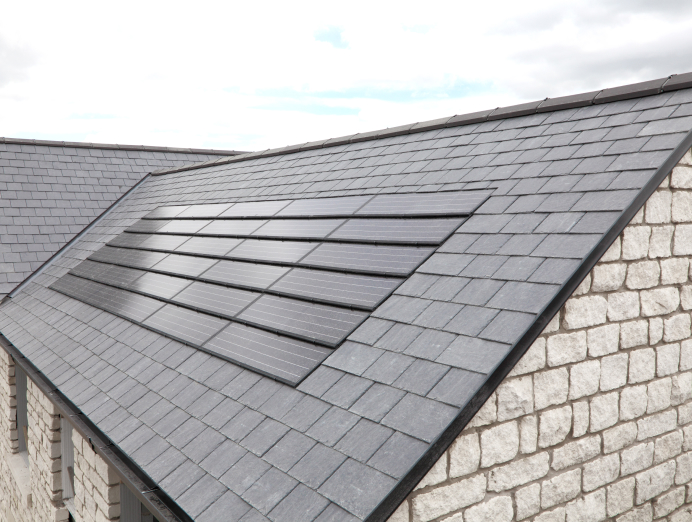
One of the most effective ways to save on electricity bills is by installing roof-mounted solar panels on your home or business. In the past, many people hesitated due to concerns over high costs and limited efficiency. While that may have been valid a decade ago, today’s technology has significantly changed the equation.
The efficiency of solar panels is expressed as a percentage, indicating how much sunlight is converted into electricity. In 2010, most solar panels operated at around 15–16% efficiency. Today, standard panels reach approximately 20%, and the most advanced models can approach over 20%. This major improvement means modern solar panels generate far more power than earlier versions.
At the same time, increased demand and advances in manufacturing have dramatically lowered the cost of solar panels by as much as 60% compared to 2010. As a result, solar installations now offer a faster return on investment and more accessible savings for property owners.
Solar Panels Paired With Battery Storage
Storage is the other big change. A home battery such as the Tesla Powerwall stores the excess energy your solar panels generate so you can use it later. That means even during a power outage, your home or business can stay powered.
Powerwall 3 has a solar inverter built in, so panels can connect to it directly. Using the Tesla app, you can monitor your system’s power production and your Powerwall’s energy levels from one place.
Your Local Solar Experts
For more than 20 years, KPost Company has been a trusted leader in solar and roofing solutions across the Dallas area. We install solar panels and Tesla Powerwall battery storage, helping homeowners and business owners find the right fit for their energy goals.
As a full-service roofing contractor, we’re also equipped to repair or replace your roof before installing a new solar system. Our team brings decades of combined experience working on thousands of residential and commercial properties.
Get Started Today
Ready to upgrade your roof with cutting-edge solar technology? Contact KPost Company today to schedule a free consultation and explore your solar panel and Powerwall options.
FAQs
Smart electrical panels are one of the bigger recent advances in how solar energy gets managed inside the home, and our master electrician explains why:

