

Key Takeaways
- Four system types, each with a different cost profile. Single-ply membrane is the most cost-effective and installs fast. Built-up roofing performs best in hail-prone areas but is slow and labor-intensive. Modified bitumen is durable and low-maintenance, though torch application demands specialized skill. Ballast is time-tested and non-penetrating but heavy and hard to repair.
- Building height changes the price more than you expect. A ten-story building costs more to re-roof than a four-story one because materials need cranes to reach the roof. Occupancy, property access, and available material storage all factor into the same calculation.
- What’s under the membrane can move the budget hard. Roof structure, cover board, insulation, and substrate materials all sit beneath the surface, and any of them needing repair raises the total sharply. Infrared technology can detect trapped moisture in those layers before the tear-off begins.
- Texas code requires resistance to 130 mph winds. That drives stronger fasteners placed more closely together than a lower-wind region would need, and fastener count and specification are a real line item on a commercial replacement.
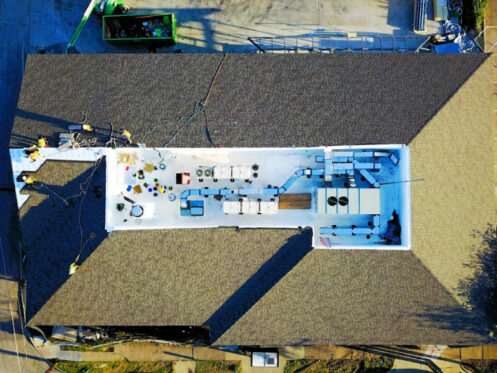
- Penetrations slow single-ply installation down. High walls, numerous pipe penetrations, and HVAC units all complicate flashing work on a membrane roof and reduce daily production. A roof with a crowded surface costs more than the same square footage sitting empty.
The roof is the most vital and perhaps one of the most expensive components of any commercial building. When your commercial roof begins to develop issues such as leaks, your long-term solution is to plan for a complete roof replacement, especially if the current roof is nearing its projected lifespan. Understanding the cost factors of commercial roof replacement can help you make a smart decision on what type of replacement to consider and how much to budget for.
1. Type of Roof
Whether your commercial roof is flat (low slope) or sloped, you have great choices of roofing materials to choose from. Depending on the size of your building, structures on your roof, and the climate in your area, you can choose between single-ply roofing, built-up roofing (BUR), Modified Bitumen, or ballast roofing.
- Membrane (Single-Ply) Roofing: Provides excellent protection against leaks, fast installation but roof flashing conditions such as high walls, abundance of roof penetration flashings such as pipes, and HVAC systems, can make installation more difficult and slows production. Most cost effective roof system.
- Built-Up Roofing (BUR): Offers excellent protection against UV rays, water, and inclement weather, but installing BUR is slow and labor-intensive.Best system in hail prone areas but cost of asphaltic materials and environmental issues are causing this installation to be receding as a option.
- Modified Bitumen Roofing: Low-maintenance and durable but some application techniques require an open flame/torch, which calls for special skills and safety measures.
- Ballast Roofing: Time tested and non-penetrable but is heavy and difficult to repair- predominantly installed in northern climates. High wind areas are not ideal installation areas.
2. Roof Access
Roof access can have a huge impact on the overall cost of replacing a commercial roof. What will it involve to get your old roof pulled off? How about the safety for the workers, disposal of the old roofing materials, and getting supplies to your roof?
Accessibility factors may include things such as:
- Building height
- Occupancy
- Material storage areas
- Property access
So, a 10-story building will undoubtedly cost more to re-roof than a 4-story property due to the need for special cranes to lift materials. Similarly, a large roofing project may require larger storage spaces to keep the roofing materials.
3. What’s Underneath
Under every commercial roof, there is a combination of single or multiple components such as the roof structure (metal, concrete, lightweight insulating concrete, or wood decking), cover board, insulation, and other substrate materials. If these underlying materials will need repair, the cost of replacement will rise significantly.
A well-seasoned roofing contractor will be able to assess your roof’s underlayment and recognize any areas which need repair. Other times, your roofer may use infrared technology or other equipment to detect moisture.
4. Wind Loads and Fastenings
Depending on your building’s geographical location, weather and codes will influence the type of fasteners used on the roof system. For example, in Texas, buildings must be built to withstand winds up to 130 mph, which calls for stronger, closely-placed fasteners. This can add to the cost of roof replacement.
5. Code Requirements
Building codes keep changing. Depending on the type of building you have, it may be subjected to different state, regional, and local codes. Speak with your roofer about the prevailing building codes may affect the cost of replacing your commercial roof in DFW Metroplex and Plano, TX.
If you’re ready to replace your commercial roof, KPost Company is your trusted partner. Since 2004, we have been installing, maintaining, and replacing commercial roofs throughout DFW Metroplex to Plano. Contact us today to schedule a free roofing consultation!
The roof is the most vital and perhaps one of the most expensive components of any commercial building. When your commercial roof begins to develop issues such as leaks, your long-term solution is to plan for a complete roof replacement, especially if the current roof is nearing its projected lifespan. Understanding the cost factors of commercial roof replacement can help you make a smart decision on what type of replacement to consider and how much to budget for.
1. Type of Roof
Whether your commercial roof is flat (low slope) or sloped, you have great choices of roofing materials to choose from. Depending on the size of your building, structures on your roof, and the climate in your area, you can choose between single-ply roofing, built-up roofing (BUR), Modified Bitumen, or ballast roofing.
- Membrane (Single-Ply) Roofing: Provides excellent protection against leaks, fast installation but roof flashing conditions such as high walls, abundance of roof penetration flashings such as pipes, and HVAC systems, can make installation more difficult and slows production. Most cost effective roof system.
- Built-Up Roofing (BUR): Offers excellent protection against UV rays, water, and inclement weather, but installing BUR is slow and labor-intensive.Best system in hail prone areas but cost of asphaltic materials and environmental issues are causing this installation to be receding as a option.
- Modified Bitumen Roofing: Low-maintenance and durable but some application techniques require an open flame/torch, which calls for special skills and safety measures.
- Ballast Roofing: Time tested and non-penetrable but is heavy and difficult to repair- predominantly installed in northern climates. High wind areas are not ideal installation areas.
2. Roof Access
Roof access can have a huge impact on the overall cost of replacing a commercial roof. What will it involve to get your old roof pulled off? How about the safety for the workers, disposal of the old roofing materials, and getting supplies to your roof?
Accessibility factors may include things such as:
- Building height
- Occupancy
- Material storage areas
- Property access
So, a 10-story building will undoubtedly cost more to re-roof than a 4-story property due to the need for special cranes to lift materials. Similarly, a large roofing project may require larger storage spaces to keep the roofing materials.
3. What’s Underneath
Under every commercial roof, there is a combination of single or multiple components such as the roof structure (metal, concrete, lightweight insulating concrete, or wood decking), cover board, insulation, and other substrate materials. If these underlying materials will need repair, the cost of replacement will rise significantly.
A well-seasoned roofing contractor will be able to assess your roof’s underlayment and recognize any areas which need repair. Other times, your roofer may use infrared technology or other equipment to detect moisture.
4. Wind Loads and Fastenings
Depending on your building’s geographical location, weather and codes will influence the type of fasteners used on the roof system. For example, in Texas, buildings must be built to withstand winds up to 130 mph, which calls for stronger, closely-placed fasteners. This can add to the cost of roof replacement.
5. Code Requirements
Building codes keep changing. Depending on the type of building you have, it may be subjected to different state, regional, and local codes. Speak with your roofer about the prevailing building codes may affect the cost of replacing your commercial roof in DFW Metroplex and Plano, TX.
If you’re ready to replace your commercial roof, KPost Company is your trusted partner. Since 2004, we have been installing, maintaining, and replacing commercial roofs throughout DFW Metroplex to Plano. Contact us today to schedule a free roofing consultation!
FAQs

