

Key Takeaways
- Check from the ground, not from a ladder. Hail weakens roofing material, so surfaces are less stable than they look, and wet or loosened shingles make climbing genuinely dangerous. Walking the perimeter and viewing the roof from several angles gives you most of the information safely.
- Angled light reveals what straight-on light hides. Surface irregularities show up when light hits the roof at an angle rather than head on. Look for a change in consistency: a roof that read uniform before the storm and now shows scattered dark spots or uneven texture is the pattern that matters.
- The ground around the house carries the evidence. Dented gutters or downspouts, chipped paint on window trim or siding, damaged outdoor light fixtures, cracked plastic vent covers, and granules piling up at downspout outlets. Dented or flattened fins on the air conditioner say the same thing.
- Hail damage is scattered, normal aging is even. Age shows up uniformly across large sections of the roof. Hail lands in isolated spots and often concentrates on one slope depending on wind direction. Normal wear also does not dent metal vents or flatten soft materials in clusters.
- Photograph now and compare later. Take clear shots from multiple angles, especially of anything that looks different from the surrounding roof, and use binoculars to examine ridge caps, vents, and flashing. Comparing against older photos is how you separate this storm’s damage from last year’s.
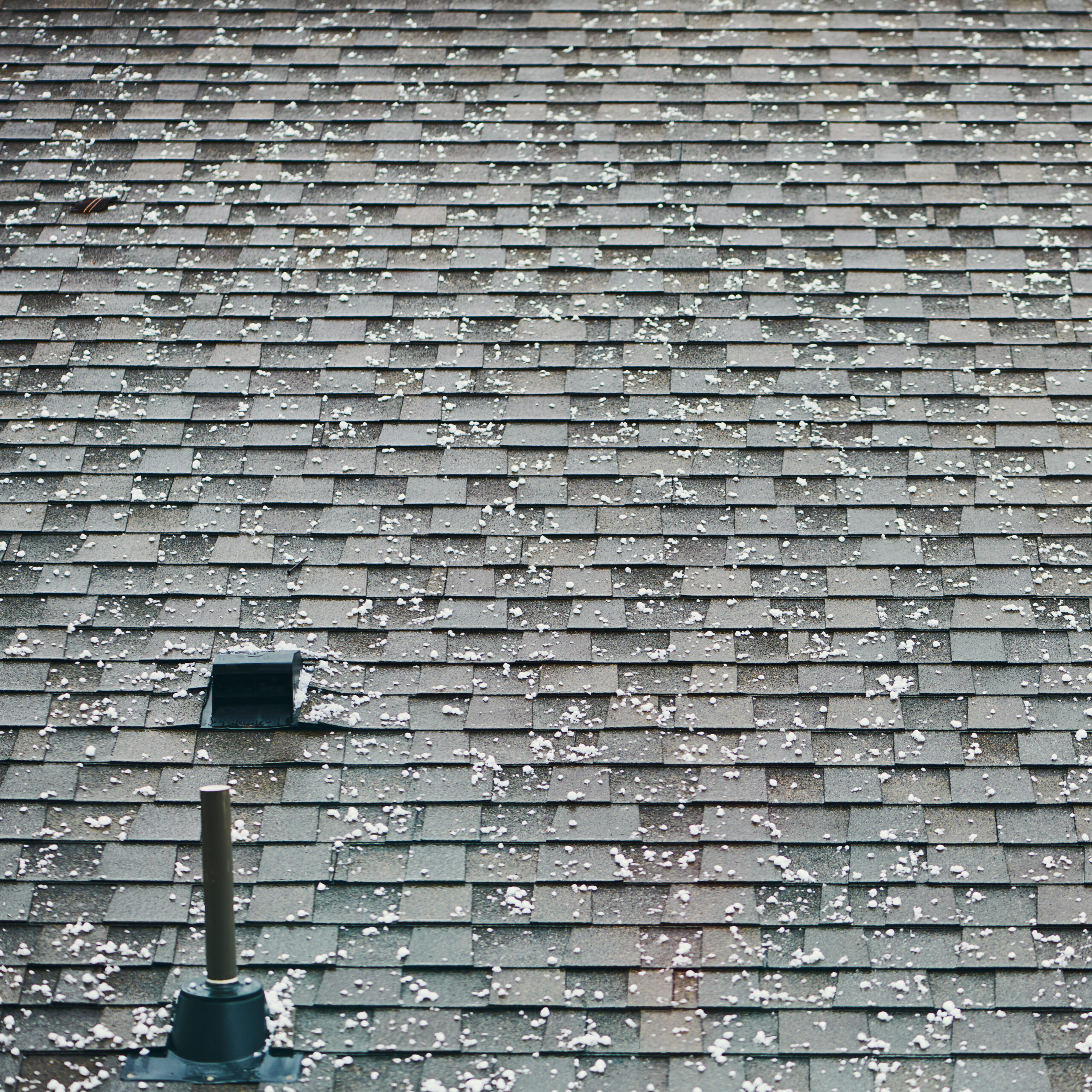
Hailstorms can move through quickly, leaving behind damage that is not always obvious at first glance. You may not see missing shingles or major debris, yet your roof could still have taken an impact. Acting early can help prevent small problems from turning into larger repairs.
Why Should You Check for Hail Damage From the Ground?
After a storm, it can be tempting to grab a ladder and climb up for a closer look. That approach carries real risk, especially when shingles are wet or loose. Hail can weaken roofing materials, making surfaces less stable than they appear. Checking from the ground protects you while still giving you valuable clues about your roof’s condition.
You can often spot early warning signs by walking the perimeter of your home. Look at the roof from different angles. Light hitting at an angle can reveal surface irregularities that you might miss when looking straight on. Pay attention to consistency. A roof that looked uniform before a storm but now shows scattered dark spots or uneven texture may need further evaluation.
You can also use simple tools to improve visibility without leaving the ground. A pair of binoculars can help you examine ridge caps, vents, and flashing more closely. Take clear photos from multiple angles, especially of areas that look different from the rest of the roof. Comparing those images to older photos, if available, can help you spot subtle changes. Look at the edges of shingles near rooflines as well. Uneven edges, small tears, or slightly lifted corners can signal impact stress that may not stand out immediately.
Damage to Look for Around Your Home
Roof damage often leaves evidence beyond the shingles themselves. The surrounding property can provide clues about the severity of the impact.
- Dented gutters or downspouts
- Chipped paint on window trim or siding
- Damaged outdoor light fixtures
- Broken or cracked plastic vent covers
- Excess granules collecting near downspout outlets
Granules that wash off the roof often collect at the bottom of downspouts. If you notice an unusual buildup after a hailstorm, it may indicate surface impact on the shingles above. Check outdoor air conditioning units as well. Fins that show dents or flattened areas suggest hail fell with enough force to potentially affect roofing materials. You can also check metal flashing around chimneys and roof valleys, since small dents or lifted edges may indicate damage that is not obvious from a distance.
Can Interior Clues Signal Exterior Hail Damage?
Sometimes roof damage becomes visible inside the home before it is obvious outside. After heavy hail and rain, inspect ceilings and upper walls for new stains or discoloration. A fresh water mark often appears lighter at first, then darkens as it dries. You might also notice peeling paint near crown molding or slight bubbling in drywall.
Pay attention to your attic as well. Look for damp insulation, darkened wood, or water streaks along rafters. Hail damage does not always cause immediate leaks, but it can weaken shingle seals and create small entry points that allow water intrusion during future storms. Catching those early signs helps prevent more extensive structural damage.
How Does Hail Damage Differ From Normal Wear?
Roof surfaces naturally age over time. Sun exposure, wind, and temperature changes cause gradual wear. The difference between normal aging and hail damage often comes down to pattern and timing. Aging tends to appear evenly across large sections of the roof, while hail impact appears scattered and may be concentrated on one slope depending on wind direction.
If your roof looked consistent before a storm and now shows isolated spots, dents, or dark marks, the change may be related to recent weather. Normal wear does not typically dent metal vents or flatten soft materials in clusters. Comparing both sides of your roof can also help identify differences. One side may show heavier impact depending on how the storm moved across your property.
When Should You Call for a Professional Inspection?
If you see multiple signs of impact, even subtle ones, it is time for a professional inspection. A roofing specialist can safely examine areas that are difficult to see from the ground and determine whether the damage affects the roof’s performance. Some hail marks are cosmetic, while others can compromise the protective surface of the shingles.
You should schedule an inspection if:
- Metal components show visible dents
- You notice new interior water stains
- Granule buildup appears unusually heavy after a storm
- Your neighbors report confirmed hail damage
Even when damage appears minor, an early evaluation helps document the condition of your roof and prevent small issues from developing into leaks.
What Happens During a Roof Evaluation?
A professional inspection typically includes examining shingle surfaces, flashing, vent penetrations, and roof valleys. Inspectors look for bruising, cracked seals, lifted tabs, and other signs that hail may have compromised the roofing materials.
Inspectors often document findings with photographs to provide a clear record of the roof’s condition. This documentation can help homeowners understand the extent of the damage and determine whether repairs are necessary. Addressing issues early can prevent further deterioration and protect the roof deck and other structural components.
Why Early Action Matters After a Hailstorm
Hail damage does not always cause immediate leaks. Instead, it can shorten the life of roofing materials by weakening their protective surfaces. When granules are dislodged or seals are compromised, shingles may deteriorate more quickly under sun exposure and heavy rain.
Addressing impact damage early helps maintain roof integrity and prevents more costly structural repairs later. Even small surface damage can create pathways for water intrusion if left unaddressed. Monitoring your roof after major storms allows you to respond before problems escalate.
How Can Hail Damage Affect Your Roof’s Lifespan and Warranty?
Even when hail damage appears minor from the ground, it can reduce the overall lifespan of your roofing system. Shingles rely on their outer layer of granules to shield the asphalt base from sun exposure and moisture. When hail dislodges those granules or weakens the surface, affected areas may age faster than the rest of the roof.
Hail impact can also affect warranty considerations. Many roofing warranties distinguish between manufacturing defects and storm-related damage. If hail damage goes undocumented and later contributes to leaks, it may complicate warranty claims. Scheduling a professional inspection after a significant storm creates a record of roof condition at a specific point in time. That documentation can help clarify whether future issues are related to storm impact or natural wear.
Stay Ahead of Storm Damage
Hailstorms can leave behind subtle damage that only reveals itself through careful observation. Checking from the ground allows you to safely look for dents, granule loss, and signs of impact around your property. At KPost Company in Dallas, we provide thorough roof assessments and clear recommendations so you can make informed decisions about your home.
Schedule a professional roof inspection with KPost Company to identify potential hail damage and protect your home before the next storm arrives.
FAQs

