

Key Takeaways
- Underlayment and ice-and-water barrier are not the same thing. Underlayment covers the entire roof deck. An ice and moisture barrier is a heavier form of protection reserved for the places most likely to fail: valleys, around protrusions, along eaves and overhangs, and above roof nails.
- Synthetic is what most roofers reach for. It’s an asphalt-saturated synthetic coated in fiberglass, highly resistant to rips and tears, and dimensionally stable. Woven reinforcement adds slip resistance for crews. It’s also flexible and breathable, which matters because breathability is what keeps mold from forming underneath.
- Felt paper is the wrong choice for a low-slope roof. Asphalt-saturated felt is budget-friendly and works on steep slopes where water runs off fast. It’s water-resistant rather than waterproof. It has no adhesive backing, so it gets nailed down and doesn’t always lie flat, which can throw off the shingles above it.
- Felt’s lack of breathability creates the real problems. Moisture that gets underneath has nowhere to go. That produces mold, mildew, foul odors, curling shingles, and warped substrate, and the damp conditions attract ants, mosquitoes, and other pests into the roof assembly.
- Most underlayment failures trace back to installation. Shingles laid over underlayment still damp from morning dew won’t adhere properly, which sets up early failure. Heavy foot traffic during installation leaves ridges, wrinkles, and tears. And every type needs several inches of overlap, since gaps there are direct moisture paths.
When it comes to protecting the value, aesthetics, and overall integrity of your Dallas, TX home, few things are as crucial as its roof. This multi-layer system provides a watertight barrier against the outside elements.
It routes moisture toward your downspouts and away from the building. It also provides critical insulation and UV ray protection. Your roof’s underlayment is a key part of this system. The following are seven things every homeowner should know about roof underlayment.
1. Underlayment Is Applied Directly to the Roof Deck
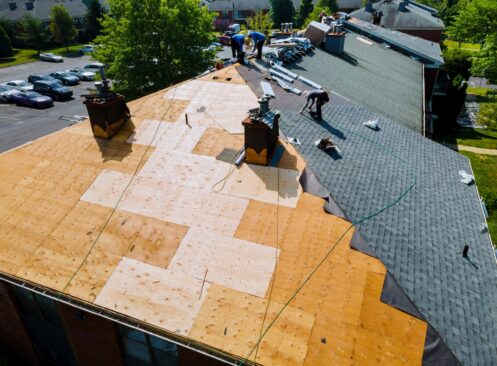
Roof underlayment is a water-resistant material that roofers apply directly to the roof deck before placing shingles, tiles, or any other outer roofing material. Designed to protect roof sheathing, it offers an important, secondary layer of protection against heavy snow loads, rain, snow-melt, and ice. If your roof ever develops problems with loose, lifted, curled, or missing shingles, the underlayment will keep moisture from finding its way into the building.
You may have heard the term “ice and moisture barrier” used as part of a roof’s multi-layer design. Although ice and moisture barriers and roof underlayment both act as moisture shields, the former offer a significantly more robust form of protection. Thus, they are frequently used in the most vulnerable roofing areas, such as:
- Roof valleys
- Around roofing protrusions
- Along eaves and overhangs
- Above roof nails
More often than not, roofers reserve these applications for places that are most likely to sustain damage from wind-driven rain, ice dams, and pooling water. In comparison, underlayment is applied across the entire roof deck and ice and moisture barriers are found in limited locations.
2. There Are Several Roof Underlayment Options
There are multiple options for roof underlayment. These include:
- Synthetic underlayment
- Asphalt-saturated felt paper
- Rubberized underlayment
Each one has its benefits and drawbacks, and some are better-suited to specific roofing types than others. When choosing underlayment, roofers consider factors like the local climate, roof slopes, roofing materials, building codes, and the homeowner’s budget.
Synthetic Underlayment
Synthetic underlayment is the preferred choice among roofers and for most standard applications. Coated in fiberglass, this underlayment is comprised of an asphalt-saturated synthetic material that’s both highly resistant to rips and tears and highly stable. For added slip resistance, synthetic underlayment can additionally have a woven reinforcement.
Many synthetic underlayment options are affordably priced. This material is also flexible and breathable. These attributes allow for easy and error-free installation while preventing roof mold.
Asphalt-Saturated Felt Paper
Also known as felt paper or tar paper, asphalt-saturated felt is a budget-friendly choice. However, although it’s water-resistant, asphalt-saturated felt falls short of being completely waterproof. This material works well on steeply sloped roofs with enough rise to promote rapid runoff, but it isn’t a great choice for flat roofs or low-sloped structures. Lacking an adhesive backing, felt underlayment is nailed down. As a result, it doesn’t always lie completely flat and may affect the position and efficacy of the overlying shingles or tiles.
Another important drawback of asphalt-saturated felt paper is its lack of breathability. When moisture finds its way beneath these applications, it can fester and cause problems like:
- Mold
- Mildew
- Foul odors
- Curling shingles
- Warped substrate
Trapped moisture can additionally create the ideal conditions for ants, mosquitoes, and other common rooftop pests.
Rubberized Underlayment
Comprised of rubberized asphalt, rubberized underlayment provides excellent waterproofing. However, it’s also the most expensive underlayment type. It comes with an adhesive backing that allows for quick, easy, and seamless installation. This creates a flat, waterproof surface that supports the accurate installation of overlying roofing materials. It’s a top choice in regions with extreme temperatures and harsh winters.
3. Roof Underlayment Problems Often Start With Poor Installation
Many things can cause a roof’s underlayment to fail, requiring roof repair or even full replacement. However, many of the most common causes can be attributed to poor or incorrect installation.
Damp Underlayment
Even a light coating of morning dew can make roof underlayment less than ideal for roof installation. Applying shingles over wet underlayment can inhibit adhesion and set the stage for early shingle failure and future roof leaks.
Insufficient Ventilation
Choosing the right underlayment type for every application is essential. While asphalt-saturated felt is a safe and economical choice for some homes, it can cause serious problems on others. For roofers, there’s a delicate balance between ensuring that roofs are watertight and that they have adequate ventilation. With insufficient attic ventilation and underlayment that lacks breathability, both the underlayment itself and the overlying roofing materials could fail.
Careless Workmanship
Having too much foot traffic on your roof when its underlayment is being installed can lead to ridges, bumps, wrinkles, rips, and other structural damage.
Insufficient Overlap
All underlayment types should overlap by several inches. This limits the risk of gaps that let moisture in even in the event of heavy foot traffic during installation. The applicable Dallas building codes set the minimum standards for overlap according to individual roof slopes, underlayment types, and roofing materials.
4. Quality Underlayment Protects Rough Framing
When shingles or tiles fail, underlayment keeps the rough framing of homes protected until homeowners schedule the necessary roof replacements or repairs. Failing to address underlayment problems can lead to warped and rotted wood, sagging roof sections, and other serious structural harm.
5. Flashing Problems Can Affect Roof Underlayment
Flashings are thin, flexible sheets of metal that roofers apply in moisture-vulnerable areas. You’ll find flashings around all roofing protrusions, at your roof’s eaves, and along your roof’s valleys. These are also the same locations where roofers apply ice and water barriers just above roof underlayment. If your roof has ripped or loose flashings or separation at its valleys, the nearby underlayment is poised to fail.
6. Damaged Roof Protrusions Can Cause Underlayment Problems, Too
It’s important to take good care of the protrusions that flashing protects. These include your skylights, exhaust vents, and chimneys. When these features are offset, cracked, poorly installed, or have other issues, your roof can sustain damage at all levels.
7. You Can Detect Underlayment Problems Early On
Although roof underlayment lies beneath your shingles or tiles, there are ways to detect underlayment problems without removing these things. Common signs of damaged or failing underlayment include:
- Water stains on interior walls and ceilings
- Warped or discolored siding
- Buckling or curling shingles
- Light entering the attic
- Recurring problems with rooftop pests or mold
However, the best way to catch and correct underlayment problems before they affect other roofing elements or spiral out of control is by scheduling regular roof inspections.
We’ve proudly served the Dallas-Fort Worth Metroplex since 2004. With extensive experience in the roofing industry, we offer expert roof inspection, installation, maintenance, and repair services. Our company also installs solar panel systems.
If you need a new roof or help verifying and protecting the integrity of your exiting one, get in touch with KPost Company now.
FAQs

