

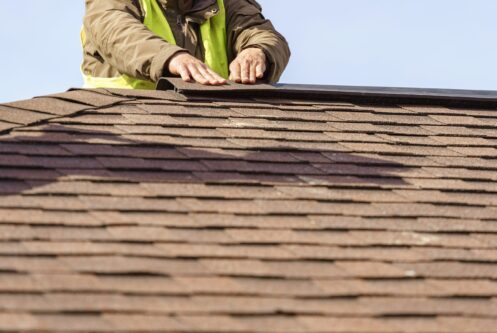
Key Takeaways
- Asphalt covers roughly 80% of American homes. Industry estimates put it there, though the share is slowly declining as alternatives improve. Three-tab is the cheapest roofing material available. Architectural, sometimes called laminated, adds layers and thickness. Designer and luxury refer to high-end architectural products.
- The lifespan gap between 3-tab and architectural is large. Basic 3-tab shingles run about 15 years, maybe 20 with good maintenance. Architectural shingles are built for 30 or more. Many roofers recommend paying up for architectural on that basis alone.
- Warranty length tracks the same split. Ten to 15 years is standard on 3-tab. Twenty-five to 30 years is standard on architectural. Many of the better products also cover workmanship defects, not just material defects.
- Wind uplift at the eaves is the failure mode to watch. Edge shingles lift in high wind, and once water gets underneath, it goes after the moisture barrier and the sheathing rather than running off. Curling along the eaves is the visible early warning. Granule loss elsewhere on the roof does the same thing more slowly.
- Fire rating runs Class A, B, or C. Most asphalt shingles earn Class A, which is full fire resistance. Class B offers moderate protection. Class C offers little, and most roofing professionals recommend against it. Check the rating rather than assuming.
Asphalt shingles are the most popular roofing material in North America and have been for many decades. The U.S. roofing industry estimates that 80% of homes have asphalt roofs. That said, there are many compelling alternatives, and the market share for asphalt roofing products is gradually declining. Let’s explore that by looking at the pros and cons of the material.
Pro: Initial Costs
The traditional asphalt shingle, often called the 3-tab shingle, is the least expensive roofing material available. The material itself is relatively cheap to manufacture. It doesn’t cost a lot to store or transport, and installation is neither complex nor time-consuming.
There are various asphalt shingle products beyond the classic 3-tab shingle. You may see the industry refer to these as laminated or architectural shingles. These terms refer to how these shingles have additional layers and therefore greater thickness. Architectural shingles are more expensive than 3-tab shingles. Still, they’re less expensive than alternative roofing products that offer similar lifespans and other characteristics. This is also true of designer or luxury shingles. The industry uses those terms to refer to high-end architectural shingles.
Pro: Ease of Installation
Asphalt shingles are suitable for practically any home. There are generally no special weight or installation considerations. The material is versatile enough to accommodate unique roof features. Reroofing a home with asphalt shingles usually takes less than a day. This is true even with large houses that have complex roofs. Installing asphalt roofing also doesn’t limit your choices in the future. A roofer can easily remove it and convert the roof to another material.
Pro or Con: Shingle Lifespan
Basic asphalt shingles will generally last around 15 years. You may get 20 years out of them with regular maintenance and a little luck. Whether this is a pro or con is a matter of perspective. There are popular roofing materials that can last 50 or 100 years. From that vantage, achieving 15 or 20 years isn’t that great. That said, context matters. These 3-tab asphalt shingles are relatively cheap, and they strike a great balance between initial and total costs. From that view, 15 years is rather good.
It’s also important to note that a selling point of architectural shingles is their longer lifespans. You can expect to get at least 30 years out of architectural shingles. While it’s not 50 or 100 years, it’s very good relative to the upfront and total costs of the material. In fact, many roofing experts recommend architectural over 3-tab shingles if you can afford the extra cost. That’s because it’ll be worth it long term due to the longer lifespan and better performance.
Pro or Con: Building Envelope
Your home’s roofing system is a key element of its building envelope. The building envelope dictates how energy-efficient the home is. An energy-efficient home will be more comfortable and cheaper to cool and heat. A potential downside to asphalt shingles is that they provide minimal insulation relative to other roofing materials. Whether this is a pro or con depends on the location of your home. In a hot climate with a lot of direct sunlight, an asphalt roof can cost you more in cooling than some other options. One way to mitigate this problem is to invest in cool shingles. These shingles reflect sunlight in order to reduce heat absorption.
Pro: Fire Resistance
Asphalt shingles for homes have a Class A, B, or C rating. Most asphalt shingles have earned a Class A rating. That means they are fully fire-resistant and provide robust fire protection. Some shingles will have a lower rating instead. Class B asphalt shingles offer moderate fire protection and will help to limit the spread of a fire. Class C shingles offer little fire protection, and most experts advise against them.
Pro or Con: Aesthetics
Basic asphalt shingles tend to be black to gray in color and not have much complexity. Whether that is aesthetically pleasing or not depends. As they say, beauty is in the eye of the beholder. Many manufacturers offer a broader color selection, and you can choose a more attractive color without a big jump in price. There are also architectural and designer shingles to consider. These products offer even more colors. They also offer different textures and designs, and there are even designer shingles that mimic other roof materials:
- Slate
- Clay tiles
- Cedar shakes
- Cedar shingles
Con: Wear and Tear Over Time
Asphalt shingles are a relatively thin roofing material. They can loosen over time, and it’s not unusual to have to replace a shingle or several over a roof’s life. Weather can cause these shingles to tear. They can bulge and otherwise become misshapen. Another concern is the loss of granules. Shingles that lose their texture are more prone to moisture penetration.
Con: Vulnerable to Wind Uplift
Asphalt shingles along your eaves are vulnerable to wind uplift. That allows rainwater underneath the shingles that then attacks the moisture barrier and sheathing. It’s important to monitor the roof and identify any edge shingles that are curling up.
Pro: Ease of Maintenance and Repair
The good news is that asphalt shingles are relatively simple and cheap to repair. It’s also very easy for a roofer to acquire the necessary materials. That includes shingles that match your existing roof. That allows a roofer to repair your roof without looking like there’s been a repair.
Pro: Warranties
Asphalt shingle warranties protect the consumer against material defects. Many of the top products have warranties that even protect the consumer from workmanship defects. For 3-tab shingles, 10-15-year warranties are standard. For architectural shingles, 25-30-year warranties are standard.
Con: Environmental Impact
A downside to asphalt shingles is that they’re generally considered bad for the environment. Manufacturers have taken steps to improve the eco-friendliness of manufacturing processes. Still, making asphalt shingles releases harmful volatile organic compounds (VOCs) into the atmosphere. Additionally, there have traditionally been limited recycling options. Often, waste from a reroofing job ends up in a landfill where it takes up significant space. The shingles break down slowly, and even as they do, they can leach harmful chemicals into the ground.
Homeowners can take steps to limit the environmental impact of their asphalt roofs. When getting quotes for a roof replacement, discuss the tear-off and disposal with contractors. Dumping the shingles at a landfill isn’t the only option. There are recycling centers that repurpose the asphalt, such as for building roads. There are also organizations that accept donations in order to reuse the shingles, such as Habitat for Humanity.
Residential and Commercial Asphalt Shingle Roofing Installation in Dallas
KPost Company is a roofing contractor that’s served Dallas, TX and the surrounding areas since 2004. Our company offers residential and commercial services. Our expert roofers work with all roofing materials. Those include asphalt shingles, clay and concrete tiles, metal roofing systems, synthetic shingles, slate roofing, and single-ply rubber membranes.
Our expert inspectors perform comprehensive inspections and assessments for many purposes. We’re available for new roof installations and roof replacements. Our expert roofers perform maintenance and repairs, including storm damage. We’re even available around the clock for emergency repairs. Call today or contact us online with questions or to schedule an appointment.
FAQs
Here is a full architectural shingle roof going on in Dallas, start to finish:

