

Key Takeaways
- Dark roof streaks are usually Gloeocapsa magma. It’s an airborne cyanobacteria whose spores settle on shingles where moisture lingers after rain. As it spreads it produces a dark protective pigment, which is the black or gray streaking that runs down the slope.
- Asphalt shingles feed it. They contain limestone-based fillers that can support algae growth under the right conditions. That’s why the problem shows up on asphalt roofs far more than on other materials in the same neighborhood.
- Early algae is cosmetic, prolonged algae is not. Discoloration by itself does not mean the roof is failing or leaking. Left in place across seasons, the growth holds moisture against the surface, which can accelerate granule loss and leave shingles more exposed to UV and heat aging.
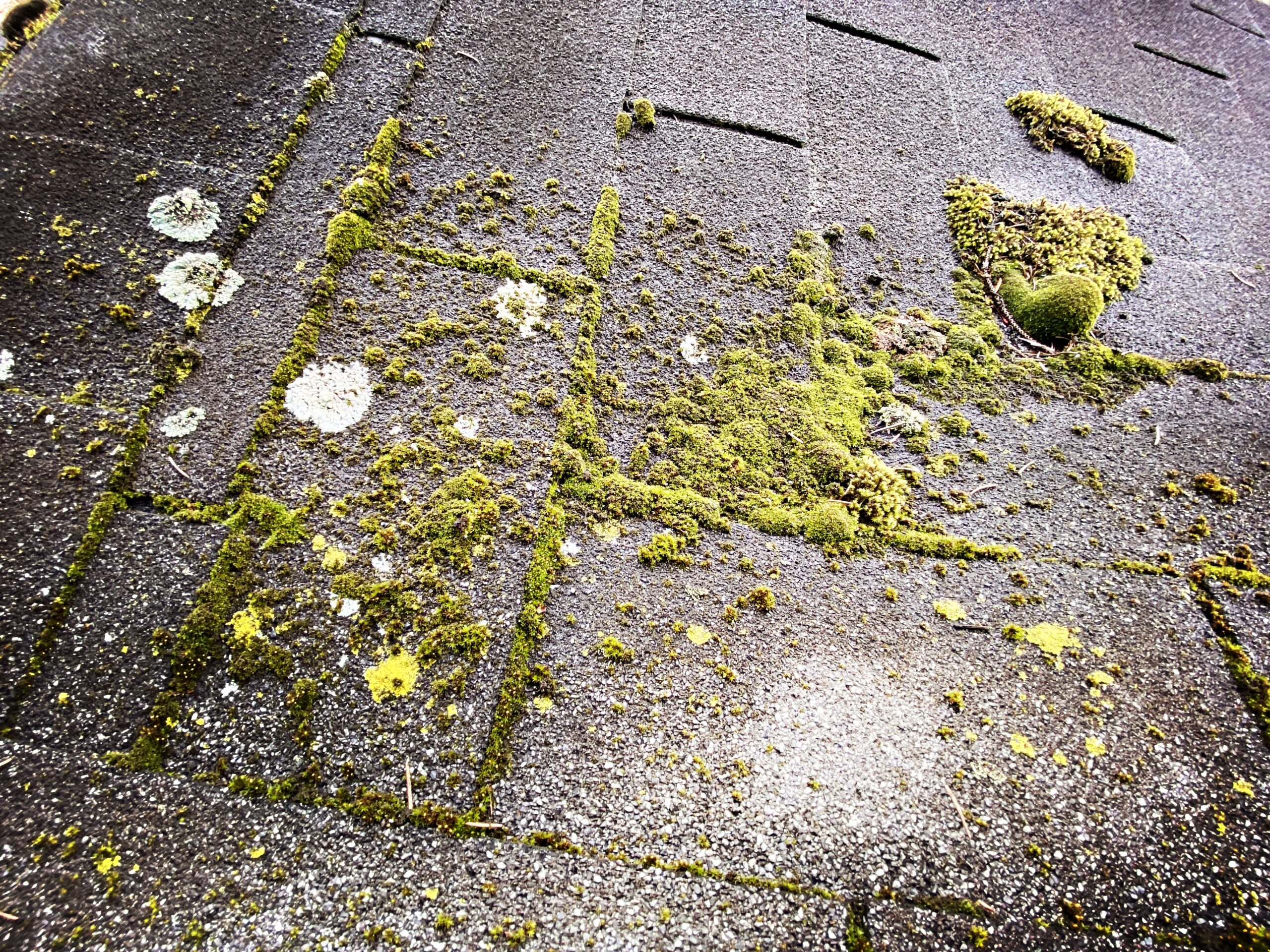
- Moss and lichen are the more aggressive follow-on. Both can appear alongside algae over time. They retain more moisture and attach more firmly to roofing materials than algae does, which makes them harder to remove and more damaging while they sit there.
- North-facing and shaded slopes go first. Sections that dry slowly after rain give the organism the standing moisture it needs. Homes in older neighborhoods with mature trees see more staining, because the trees supply shade and organic debris at the same time.
Dark streaks on a roof are easy to dismiss as dirt, weathering, or simple discoloration. In many cases, however, those stains are caused by roof algae and other biological growth that thrive in warm, humid conditions. In North Texas, where roofs regularly face heat, humidity, and seasonal storms, these streaks are especially common on asphalt shingles.
In the early stages, roof algae are largely cosmetic. Over time, though, widespread biological growth combined with ongoing moisture retention may contribute to premature roof wear and reduced roofing-system performance. Understanding what causes dark streaks, and when they may require professional attention, can help homeowners protect the long-term condition of their roof.
What Causes Dark Streaks on a Roof?
Dark roof streaks are commonly caused by Gloeocapsa magma, a type of airborne cyanobacteria that grows on roofing surfaces. The spores travel through the air and settle on shingles, especially in areas where moisture lingers after rainfall.
As the organism spreads, it produces a dark protective pigment that creates the black or gray streaks often seen running down roof slopes. Roof sections that receive less sunlight or remain shaded for longer periods tend to stay damp longer, creating favorable conditions for algae growth.
Homes surrounded by mature trees may face an even higher risk because trees provide shade while also introducing debris and moisture onto the roof surface. Moss and lichen may also appear alongside algae growth over time. While algae primarily affect the roof surface, moss and lichen can become more aggressive because they retain moisture and attach more firmly to roofing materials.
Are Roof Algae Only a Cosmetic Issue?
In the early stages, roof algae are primarily a cosmetic concern. The discoloration itself does not automatically mean the roof is failing or leaking. However, when biological growth remains on the roof for extended periods, it may contribute to increased moisture retention and gradual roofing-material deterioration over time.
Asphalt shingles are particularly susceptible because they contain limestone-based fillers that can support algae growth under the right conditions. Persistent moisture on the roof surface may also accelerate granule wear, especially on older shingles already exposed to years of sun and weather.
As protective granules wear away, shingles may become more vulnerable to UV exposure, heat-related aging, and long-term weathering.
How Roof Algae May Affect Roofing Performance Over Time
Roof algae typically develop gradually rather than causing sudden damage. However, widespread biological growth combined with prolonged moisture exposure may contribute to premature aging in some roofing systems.
Over time, excessive algae, moss, or lichen growth may contribute to:
- Accelerated granule loss on asphalt shingles
- Increased moisture retention on the roof surface
- Faster weathering and UV exposure
- Reduced shingle flexibility as materials age
- Additional stress on already aging roofing systems
- More aggressive biological growth such as moss or lichen
While algae alone do not automatically create structural failure, neglected roof conditions combined with aging materials and trapped moisture can eventually contribute to more significant roofing problems if left unaddressed for long periods.
Why North Texas Roofs Are More Vulnerable
North Texas weather creates favorable conditions for roof algae growth throughout much of the year. Extended summer heat, humidity, rainfall, and seasonal storms all contribute to the moisture conditions algae need to spread.
North-facing roof slopes and shaded sections often dry more slowly after rain, increasing the likelihood of biological growth developing in those areas first. Older neighborhoods with large mature trees may also experience more roof staining because of reduced sunlight and increased organic debris.
In many homes, algae growth develops gradually over multiple seasons. What begins as light staining may slowly spread across larger sections of the roof if moisture conditions remain consistent.
Related Post: Conducting a Roof Inspection After a Storm
Signs It May Be Time for a Roof Inspection
Dark streaks alone do not always mean a roof requires replacement. However, certain warning signs may indicate that the roofing system should be professionally evaluated.
Homeowners should consider scheduling an inspection if they notice:
- Heavy streaking across large roof sections
- Visible moss or lichen growth
- Granules collecting in gutters or near downspouts
- Curling or deteriorating shingles
- Signs of moisture intrusion near the roofline
- Rapid worsening of roof staining over a short period
A professional inspection helps determine whether the issue is primarily cosmetic or whether the roof system is beginning to show signs of more advanced wear.
Algae-Resistant Roofing Options
If a roof is approaching the end of its service life, some homeowners choose algae-resistant roofing materials during replacement projects. Many modern roofing products are designed to reduce moisture retention or inhibit biological growth more effectively than traditional materials.
Roofing materials that may offer improved algae resistance include:
- Algae-resistant asphalt shingles with copper or similar protective granules
- Metal roofing systems with smooth, nonporous surfaces
- Synthetic roofing materials designed to resist moisture absorption
- Clay or concrete tile roofing systems
- Slate roofing materials
The right roofing material depends on several factors, including the home’s design, roof slope, surrounding environment, long-term maintenance goals, and budget.
Professional Roof Evaluations for North Texas Homes
Dark streaks on a roof may look minor from the ground, but a professional inspection provides a clearer understanding of the roof’s actual condition. Evaluating shingle wear, granule retention, flashing performance, and moisture exposure together helps determine the most appropriate next steps.
With decades of experience, KPost Company provides residential and commercial roofing expertise focused on long-term roof performance, durability, and weather protection.
Contact KPost Company today for a professional roof inspection in the Dallas, TX, area.
FAQs

